11 NOV 2025
IFGL Pensions Customer Newsletter
Edition 1 – November 2025

Hello and welcome to our new Customer Newsletter.
At IFGL Pensions we are keen to foster close links with our customers, and we know from our recent Customer Service Survey that this is something you are looking for too.

We carried out the survey over the summer, in conjunction with Investor In Customers (IIC) and we received hundreds of responses. As part of the survey you told us you are looking for better and more frequent communication from IFGL Pensions.
This newsletter is a direct response to that request. We hope it will go some way to demystifying the world of pensions and to helping you feel more connected to the work we’re doing on your behalf.
In this edition, we explain how we fit into the pension administration process and also bust some pension-related jargon.
Plus, our Technical Services Manager Steve Berridge looks ahead to UK Chancellor Rachel Reeves’ Budget next month and the ways in which it might affect you and your money.
We hope you find it useful and informative. We’d welcome any suggestions for future content so please feel free to email us with your feedback.
Thanks so much for trusting IFGL Pensions with your future.
All the very best,
Rachel
What role does IFGL Pensions play in administering your Pension?
It’s important to understand the role that IFGL Pensions plays in administering your Self-Invested Personal Pension (SIPP) scheme.

The UK’s Finance Act 2004 requires that every pension scheme must have a scheme provider and administrator. IFGL Pensions provides this important role for your SIPP. We are responsible for the day-to-day operation and administration of your SIPP and are regulated by the UK’s Financial Conduct Authority (the FCA).
As well as acting as the scheme provider and administrator, we also act as the trustee for your SIPP through our MW SIPP Trustees Limited company.
What are the key duties of a SIPP administrator?
Securing regulatory and tax compliance:
- We register the pension scheme with HM Revenue & Customs (HMRC) and the Pensions Regulator.
- We manage tax relief on contributions and operate the relief at source system (which means your contributions paid by you out of post-tax income, and we then claim and apply basic rate tax relief for you*).
- We report scheme events and provide quarterly and annual returns of information to HMRC, the FCA and the Pensions Regulator.
- We implement a robust framework for all products under the Consumer Duty, including addressing complaints and ensuring fair treatment of customers.
- We maintain data on the scheme and your SIPP to ensure adequate oversight.
*Please note if you are eligible for higher or additional rate tax relief you will also need to reclaim the extra tax relief you’re entitled to from HMRC. You can do this via self-assessment tax return, or by contacting your tax office.
Scheme management:
- We maintain your SIPP and ensure it complies with all current pension legislation.
- We calculate and review your pension benefits according to legislation and issue you with annual statements and other statutory communications.
- We appoint or work with other parties such as investment providers and discretionary fund managers who hold custody of your investments. We comply with regulatory requirements for SIPP operators in respect of carrying out due diligence on investment providers and monitoring transactions.
- We operate risk management systems to minimise the risk of financial crime and other potential risks, helping members avoid fraudulent or pension scam activity.
Member services:
- We provide information to our scheme members about their pension, including details about your pension savings, choices at retirement and transfers.
- We operate administration teams that are on hand to answer questions that you may have about your SIPP. We cannot provide you with financial advice or tax advice.
- We manage accounts and facilitate your access to investments and transactions through various platforms.
It is important to note that IFGL Pensions is NOT responsible for, or involved in, the investment choices you make. How much to put in, where to invest it and how much to take out when you come to retire is decided by you, normally working in conjunction with your financial adviser. We do however reserve the right to refuse certain assets to be held in your SIPP, and to require assets that are held to comply with our investment guidelines.
Other parties involved in your SIPP:
There are a number of other professional parties who play a role in your SIPP. These can include the following:
Your Financial Adviser
Your financial adviser is completely independent of IFGL Pensions. Your financial adviser will work with you to understand your financial goals and objectives and put in place a plan to achieve them.
Your financial plan is likely to include use of products, and they may have recommended a SIPP administered by IFGL Pensions. It is also likely that you will have discussed any investment choices with your adviser.
Your adviser may continue to provide ongoing advice in relation to your investment choices, as well as your wider financial needs.
The Trustee
We appoint MW SIPP Trustees Limited to act as the trustee for your scheme. The investments you make within your SIPP are held in the name of the trustees. The trustees provide additional oversight for your SIPP, including making decisions on the payment of death benefits.
Investment Provider and/or Discretionary Fund Manager (DFM)
Your investment provider is another external counterparty, independent of IFGL Pensions, and selected by you and your financial adviser. The investments you choose will be held within your SIPP. Your investment provider will hold custody of your investments. Your investment provider might be a platform, a bond, directly listed funds, or other assets.
In addition to your financial adviser, you might also work with a DFM. A DFM will select investments for you based upon your attitude to risk, capacity for loss, and your financial goals. They will manage those investments for you, using their discretionary mandate to buy and sell assets within your overall investment portfolio.
Key points to watch out for in the UK Autumn Budget
We are fast approaching the next budget, which this year is quite late, on 26 November. It doesn’t seem long since Rachel Reeves, the chancellor, gave her first budget in October of last year and announced some proposals which were quite controversial. Perhaps not surprisingly then the media has been a frenzy of speculation in recent weeks about what changes we might see this time.
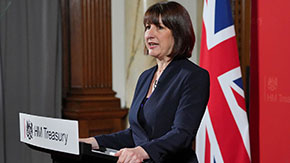
The pension world was rocked a little in October 2024, when the chancellor announced that from April 2027, for the first time, most pension pots would fall within the remit of inheritance tax. There had been other rumours last year about various tax benefits being removed, none of which came to pass, so what should you do now, if you are feeling a little anxious?
The first action we normally recommend people to take is to speak to their financial adviser, but overall, our message would be not to act in haste, based on what might happen, which you might regret later.
For example, some people are concerned that the tax-free cash sum option might be removed or at best capped. There were similar rumours last year that this tax benefit might be removed and many people quickly withdrew their tax-free lump sums. When the chancellor left the option unchanged, some of these who had hastily acted to withdraw large lump sums then contacted their pension providers to see if they could return them. This caused problems, because unfortunately the tax-free cash sum (known in pension circles as the “pension commencement lump sum” does not come with cancellation rights.
Obviously being able to take a lump sum free from UK income tax is an attractive benefit. It isn’t always automatically the best option for everyone however. For example, once that lump sum is outside your pension, until it is spent, it sits inside your estate for inheritance tax purposes.
If you are a non UK resident it is also worth bearing in mind that this lump sum might be free from UK income tax but taxed in your country of residence when it arrives in your bank account.

Another tax benefit the Government might look to change is the tax relief which is payable to UK residents when they make personal contributions. This is a type of credit with the 20% basic rate being added automatically by your pension provider and the additional 20% or 25% available for higher rate or additional tax rate payers being claimed via self-assessment.
It is possible the Government might look to cap this at one standard rate, for example 20%. This might deter some people from making pension contributions, but here it is important not to overlook the other benefits that a pension contribution can offer. For example, the investments in the fund grow free from any Capital Gains Tax liability and any dividends paid from the investments held in your pension do not attract a dividend tax.
In conjunction with possible direct changes to the pension tax reliefs, there has recently been much speculation about whether the Government might make changes to the Inheritance Tax regime. They could look to clamp down on gifts out of regular giving, or reduce the exemptions, such as the £3,000 annual exemption. These could impact pensions from April 2027, when for the first time, most pension schemes will be included in the value of someone’s estate.

There have been some “alarmist” headlines in the media in recent weeks predicting the death of the pension industry, but it’s worth bearing in mind that alternatives such as ISAs do not currently provide any protection against IHT either. Pensions on the other hand do, currently, provide a good deal of protection from taxes that affect other investment types, such as Capital Gains Tax and Dividend Tax (on investment growth and income).
So, to conclude, these are some thoughts on areas of pension taxation the Government might look to make changes to. The simple truth however, is that we cannot second guess at this stage what changes will be announced on 26 November. Therefore, if you really are not in need of your pension benefits at this time, the safest course of action might be to wait and see, rather than act hastily. But if you are concerned, a conversation with a financial adviser is certainly recommended.
JARGON BUSTING
The pension world is full of interesting terms and phrases which can be incredibly confusing to those not familiar with them. We at IFGL try and make things clear and understandable, so we have picked three examples to “decode”.
Flexi-Access Drawdown
When they get to the stage when they decide that they wish to start taking some money from your pension, most people will firstly look to take their 25% tax-free cash sum payment. This leaves the rest of their pension pot for them to either start taking an income from or to remain invested for the time being. The most popular option tends to be income drawdown. Since April 2015 the only income drawdown option available for new retirees has been known as “flexi-access drawdown”.

What this means in practice is that the amounts you can take out as income are flexible. You can take as much or as little as you want, whenever you want. The main factor to bear in mind is that regular large withdrawals can deplete your fund quickly. Important to consider these days as life expectancies are longer than they used to be and you can be retired a long time!
Crystallisation
This is another pension term that is frequently used in our industry and can be confusing for some. What it describes is the process that takes place when you start to draw from your pension fund. The moment that you decide to take income or a tax-free cash sum, either part or all of your fund will move into what we call a “crystallised” state.
By comparison during your working life, when you are paying contributions to your pension and not drawing any benefits from it, your pension fund is considered to be “uncrystallised”.
Pension Sharing Order (or PSO)

This is an option which is available in connection with a pension that many people will be unfamiliar with. When couples divorce it is common for the pension held by one party to be a valuable asset taken into account when splitting the marital estate.
After your house, your pension is usually your second most valuable asset, in fact. Therefore, it is common in divorces for pensions to be split between the separating parties. The most common method of achieving this is by way of a “Pension Sharing Order”. This takes the form of a court order, which stipulates the percentage of the pension which will be awarded to the ex-spouse. For example, 60% might be awarded to an ex-spouse and this will result in 60% of the fund value of the pension being transferred to a pension in the name of other party.
It is the most popular form of divorce settlement involving a pension as it leads to a “clean break”. What this means is that once the pension has been split, the two parties are able to go their own separate ways with no further claims on the pension being possible in the future from the ex-spouse.